Lula claims fourth Brazilian presidency
The incumbent defeated Senator Flavio Bolsonaro by 4.3 million votes in a runoff that defied historical precedent.
By Oliver Bennett ·
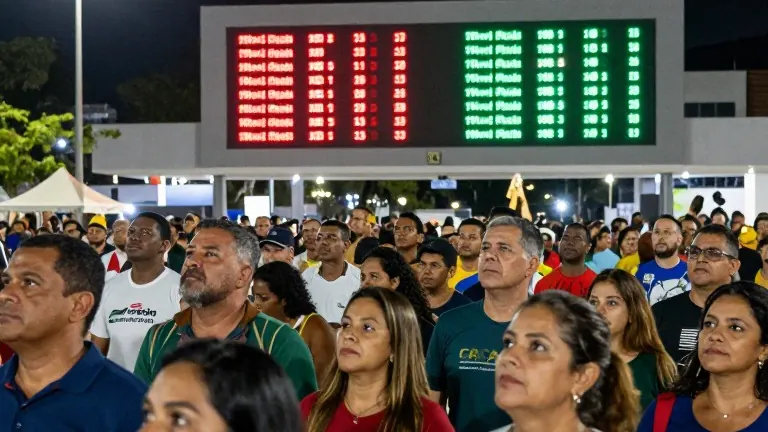
Luiz Inácio Lula da Silva won a fourth nonconsecutive term as president of Brazil on Sunday. The Workers' Party leader secured 51.79% of the vote against Flavio Bolsonaro's 48.21%. This margin represented approximately 4.3 million votes out of 159 million cast. Results were declared shortly after midnight UK time on October 26, 2026.
The victory marks a sharp reversal from the first round held earlier this month. In that initial vote, Flavio Bolsonaro led with 56.1 million votes compared to Lula's 53.8 million. The first-round totals stood at 47.03% for Bolsonaro and 45.16% for Lula. Since democracy returned to Brazil in 1985, no first-round runner-up had previously won the second ballot.
Polls tightened in the weeks between the two votes. The final gap narrowed to fractions of a percentage point. Several factors shifted the electorate toward Lula. A record abstention rate of 21% in the first round affected lower-income voters and progressives. This demographic gap was addressed through targeted mobilization efforts.
A WhatsApp channel called Lula's army sent daily instructions to users. These messages encouraged supporters to make pro-Lula content go viral. Lula, who recently acquired his first smartphone, began posting on Instagram and TikTok. His digital reach surpassed that of the Bolsonaro camp for the first time. Conversely, the Bolsonaro campaign faced scandals. The magazine Piauí reported that Flavio Bolsonaro attended a 2020 boat party with sex workers and vaccine lobbyists.
Jair Bolsonaro, Flavio's father, leads the radical populist movement. He is currently serving a 27-year prison sentence for plotting a coup after losing the 2022 election. Lula described the outcome as a defeat for denialism. The former president had drawn strength from the growth of evangelical Christianity and voter anger over urban crime.
A dozen watchdogs and research groups alleged that Meta favored the Bolsonaro campaign. Brazil's electoral court ordered Meta to avoid unequal treatment of candidates. The company called these allegations false and unfounded. United States politics also influenced the race. President Donald Trump called the trial of Jair Bolsonaro a witch-hunt. He imposed 50% tariffs on Brazilian imports. Lula positioned himself as a defender against Trump's colonial designs.
Lula pursued a multilateral foreign policy balancing relations with the US, China, and Russia. He declined invitations to join a Latin American coalition conducting military operations against drug cartels alongside the Pentagon. The result carries environmental weight. Deforestation in the Amazon fell by more than 70% under Lula's previous administration. His government also cracked down on illegal mining and supported Indigenous people.
Flavio Bolsonaro has refused to concede the result. He cited the decision to extend voting hours by two hours as a reason. He stated it was impossible to concede the election result. World leaders are already recognizing Lula's win. Tom Phillips, a Guardian Latin America correspondent, expects the challenge to fail. Phillips suggested Bolsonaro may travel to the United States to avoid ongoing criminal investigations.
Violence from supporters remains possible, according to Phillips. He believes Bolsonaro's political career is over. Lula turns 81 on Tuesday. He will work with a newly elected congress that includes a record number of right-wing politicians. These legislators are hostile to Indigenous rights and environmental causes.
Source: The Guardian