Bulk tanks to replace milk cans at Goodridge co-op
New state regulations will shift northern Minnesota dairy operations to self-cooled containers, ending a 75-year daily delivery ritual.
By Nadia Rahman ·
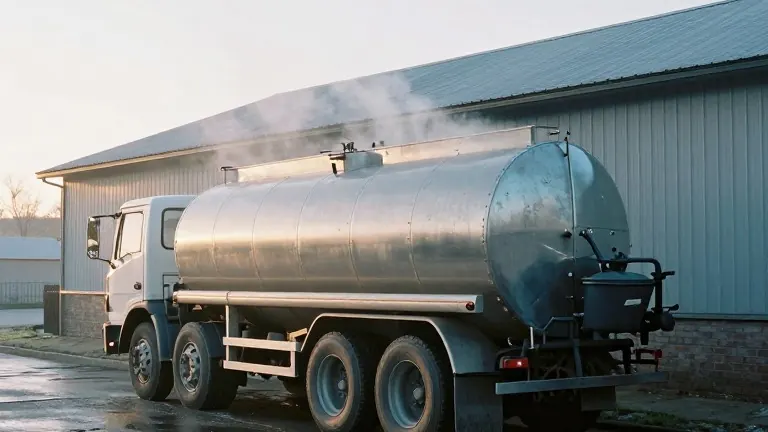
Northern Minnesota dairy operations face a structural shift in how raw milk moves from farm to processor. New legislation taking effect next year will phase out the use of traditional milk cans in favor of bulk self-cooled containers. This change will alter the daily logistics for the Goodridge Creamery, a cooperative that has operated in the region for 75 years.
For decades, farmers delivered milk to the Goodridge facility in individual cans. Manager Orlin Hanson stated that the new rules mean daily trips will likely cease. The creamery will continue to operate and handle both bulk and can-based producers, but the volume of steam generated by the can-washing machinery will decrease. That specific machine, which uses cold water and steam to clean and dry cans, was recently purchased for $100 from a defunct operation.
The shift reflects a wider industry trend where creameries have largely disappeared from small towns. Goodridge is one of only four non-bulk operations remaining in northern Minnesota. Hanson attributed the facility's survival to a cooperative model and the tenacity of local farmers who kept the business open during difficult periods. The cooperative, built in 1908 before the city was incorporated, has diversified its inventory to include goods ranging from ice cream to plow shares.
Economic cycles in the grain market have influenced dairy production in the area. During the 1970s, rising wheat prices led many farmers to exit the dairy business. Recently, lower wheat prices and declining land values have prompted some producers to revive their herds. Hanson noted that as long as cows are producing milk, the operation generates revenue.
Regulations dictate specific uses for milk transported in cans. According to law, this product can only be processed into powder, cheese, or butter. From Goodridge, the milk is transported to Fosston for processing by Land O' Lakes. The facility combines older equipment with modern testing methods, such as using test tubes to analyze butterfat content and bacteria levels.
Hanson emphasized that the creamery serves as a hub for local commerce. The flow of milk deliveries supports other businesses in Goodridge, including grocery stores and gas stations. He described the local economy as interconnected, noting that each business relies on the activity generated by the others.
The steam that typically fills the air in the morning is expected to diminish as the transition to bulk tanks progresses. The facility remains in business, adapting its operations to comply with the new regulatory framework while maintaining its role in the local supply chain.
More Business · Consumer Watch · Report a business · Got a Story?