Arizona nonprofit stores bodies in liquid nitrogen
Alcor Life Extension Foundation charges up to $220,000 to freeze patients, betting future medicine can repair the damage.
By Oliver Bennett ·
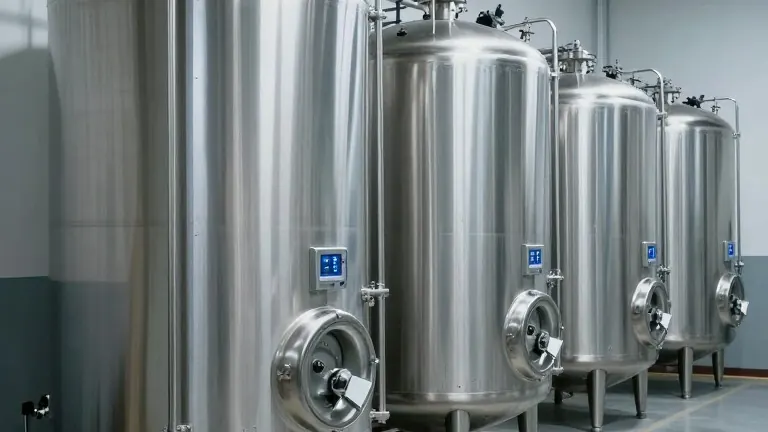
Alcor Life Extension Foundation keeps hundreds of human bodies and heads frozen at minus 320 degrees Fahrenheit in Scottsdale, Arizona, waiting for medical advances that do not yet exist. The nonprofit has operated since the 1970s, offering a service called cryonics that pauses the dying process using subfreezing temperatures. It stores members in large vacuum-insulated containers known as dewars.
The organization’s central premise is preservation rather than immediate resurrection. James Arrowood, the foundation’s CEO, argues that critics misunderstand the goal by asking if they are bringing people back from the dead. He states that the procedure uses a process called vitrification to keep cells and tissue intact. Chemicals and controlled cooling prevent ice crystals from forming, which would otherwise destroy cellular structures during freezing.
Arrowood describes the chemical solution used, known as M22, as a biological antifreeze. He explains that while ice forms outside the container, none forms inside the tissue. The foundation hopes this technique will eventually benefit organ donation and transplantation by reducing tissue degradation. If the method proves reliable, it could address the time sensitivity that currently limits medical transplants.
When an Alcor member dies, a specialized response team called DART begins work immediately. Medically trained personnel, including former military members, start cooling the body as soon as legally permitted. The preparation process takes about a week. Staff replace blood with preservation solutions and lower the temperature gradually before placing the patient in liquid nitrogen. Members can choose between whole-body preservation or neuro preservation, which stores only the head.
Costs for the service are high. Whole-body preservation typically costs about $220,000. Neuro preservation generally ranges from $80,000 to $90,000. These figures reflect an investment in a future outcome that remains unproven. Rick Lemler, an author and Alcor member, said he signed up to be cryopreserved after legal death. He called the decision a gamble based on possibility rather than certainty.
Skepticism persists within the medical community. Dr. Arthur Caplan, a bioethicist at NYU Grossman School of Medicine, called the idea of freezing a body or head with the expectation of revival preposterous. He cited barriers such as achieving correct chemical balance and integrating a frozen brain with a new body. Caplan noted that a transplanted brain would receive signals from new nerves that it would not know how to process. However, he acknowledged that freezing kidneys or cells for repair is a realistic future possibility.
Alcor has faced legal disputes and calls for regulation over the decades. Arrowood said many online criticisms refer to conflicts that are 30 to 40 years old. Recent issues tend to involve logistics and life insurance policies used to fund preservation. Photos of members line the walls inside the facility. These include one of the organization’s youngest members, a 2-year-old girl from Thailand who died of brain cancer.
Arrowood admitted he does not know if the technology will ever work. He compared the effort to early heart transplants, where patients knew they would die shortly after surgery but accepted it to help future generations. Lemler said he is concerned the process might fail but feels he is not losing anything by trying. The foundation continues to store members in its Scottsdale facility while waiting for those advances.