
Trump calls Iran war 'effectively over' as Gulf allies press for deal
The president said further strikes are unlikely after meeting Qatar's prime minister, but internal friction grows as Republicans face midterm losses.
By Nadia Rahman ·
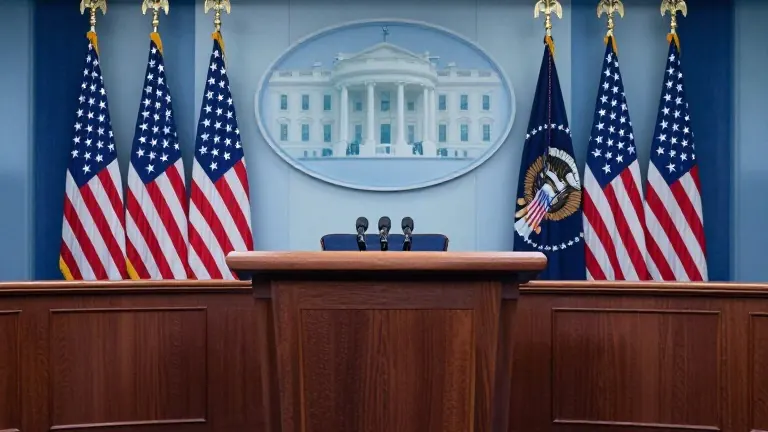
President Donald Trump declared the war with Iran "militarily effectively over" on Monday, telling reporters in the White House briefing room that renewed American attacks are "highly unlikely." He described the current posture as a status quo maintained at the request of neighboring nations, while keeping the US military "locked and loaded" in case circumstances shift.
The president pointed to "positive momentum" in negotiations to end the conflict, a stance that follows a difficult week for his party. Republican midterm results last week saw bruising losses that senior figures, including Vice President JD Vance, attributed directly to the ongoing conflict in the Middle East. Trump had previously described US actions as "minor strikes" on an Iranian island in the Strait of Hormuz, but in a Sunday interview with 60 Minutes, he said he saw "no reason" to escalate further.
Trump hosted Qatari Prime Minister Sheikh Mohammed bin Abdul Rahman Al Thani in the Oval Office earlier in the day. The two men discussed pathways to peace, which Trump described as an "excellent conversation." Al Thani later posted on X that he held "positive discussions" with Trump and Vance on reaching a deal to bring peace to the region. Since joint US and Israeli strikes launched the war in February, mediators have largely handled indirect talks between Washington and Tehran.
Gulf allies Saudi Arabia, Qatar, and the United Arab Emirates have all faced Iranian strikes during the conflict, alongside air travel disruptions from the threat of further attacks. Trump noted that these allies remain at risk of aggression, which is why the US has not officially declared the war ended. He cited the US naval blockade on Iranian ports as a key factor in securing the region for these partners.
Tensions are also mounting within the Republican administration. Congressman Thomas Massie, a fellow Republican, asked the House to vote on impeaching Defense Secretary Pete Hegseth over his handling of the Iran war. Hegseth said he is "not worried" about the threats, while Trump called the effort a "sham." Democrats have signaled they will push to impeach Hegseth once they take control of both chambers of Congress in January.
Iranian officials have repeatedly voiced doubt about Trump's previous comments regarding a resolution. The president's current optimism follows a period where he hinted at de-escalation, marking a shift from earlier rhetoric. The administration balances the need to support Gulf allies with the political pressure to close a conflict that cost Republicans significant ground in the recent elections.