Metrolink seeks rock barriers and sand to shield San Clemente rail line
The California Coastal Commission is set to vote Thursday on a plan that would reinforce two vulnerable stretches of track with stone and sand to protect the sole rail link between San Diego and Los Angeles.
By Oliver Bennett ·
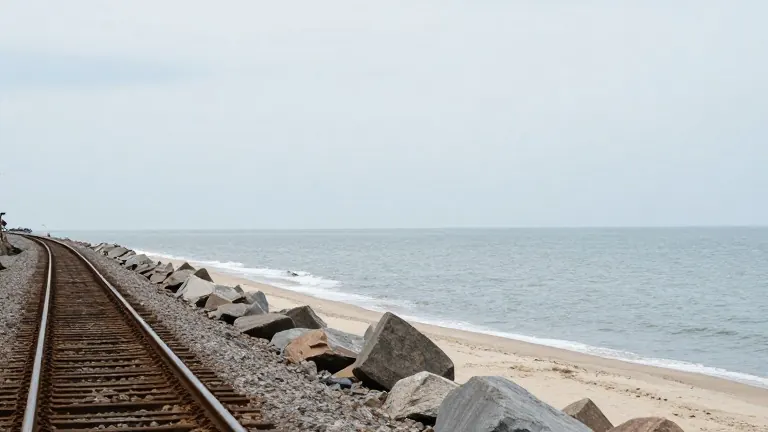
Commuters and cargo moving between San Diego and Los Angeles face continued disruptions as officials propose a new mix of sand and rock to protect the region's only rail connection. The plan targets two specific areas in San Clemente where the tracks have become increasingly exposed to the ocean.
The California Coastal Commission's technical staff has recommended approving a coastal development permit for the project. Metrolink and the Orange County Transit Authority requested the work. The commission's board will review the recommendation during its meeting this Thursday in San Francisco.
The proposal involves two distinct sections of the coastline. One site lies just north of the San Clemente pier. The other is located south of the pier, near Cyprus Shore and San Clemente State Beach. These two zones are separated by approximately two miles.
According to the commission's 115-page technical report, the rail corridor has been designated as strategic for national defense. It primarily handles freight and interregional passenger traffic across San Diego, Orange, Los Angeles, Ventura, Santa Barbara, and San Luis Obispo counties.
The report states that the San Clemente section of the line has grown more vulnerable to coastal risks since 2021. These risks include sea level rise, cliff erosion, and damage to structural foundations. As a result, safety closures have become routine, often lasting weeks or even months.
The commission has processed 15 rail stabilization projects since 2021. Ten of those were emergency coastal development permits. The current proposal aims to defend the tracks against coastal erosion, marine flooding, and wave runup ahead of the El Niño season.
John Dow, a board member of the local group Save Our Beaches, wrote to the commission to voice concerns. He acknowledged the need for rail safety but urged the board to limit the use of stone riprap. Dow requested more frequent and substantial sand replenishment instead. He argued that the balance between track protection and public use is essential for the general interest.
Ecological groups, including the Surfrider Foundation and Save Our Beaches, oppose the use of stone barriers. They argue that riprap occupies public recreational space and can accelerate beach erosion. Save Our Beaches published a newsletter in October urging residents to attend the Thursday meeting to voice their opposition.
The group's newsletter states that the rocks will speed up erosion on an already narrow beach. It warns that lateral erosion will force more rocks to be placed further north. The organization calls for a halt to the placement of these barriers.
Sand replenishment is a standard method for combating coastal erosion. While the sand eventually washes away, it protects infrastructure and provides public beach space in the meantime. San Clemente has replenished its beaches periodically since 1928, using material from local developments and dredging projects. In the late 1960s, approximately 2 million cubic yards of sand were added to Doheny and Capistrano beaches.