
FAA to retire floppy disks from air traffic control by 2028
The agency will replace 1980s-era systems at 400 facilities with a new display platform while addressing recent fiber optic failures.
By Nadia Rahman ·
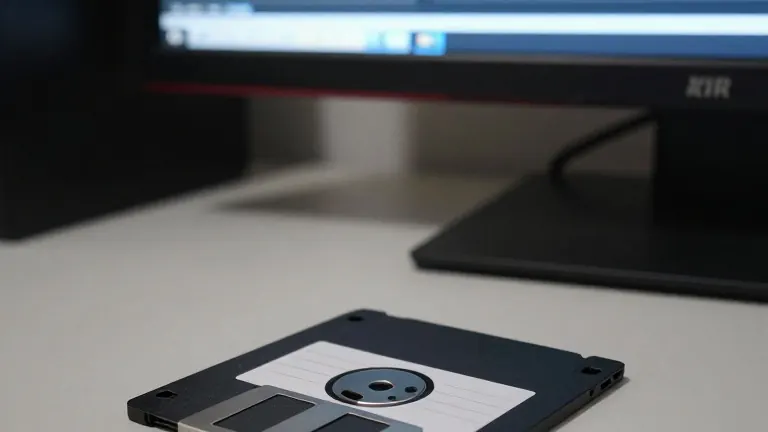
The Federal Aviation Administration announced Thursday that it will eliminate the use of floppy disks at more than 400 air traffic control facilities across the United States. The agency plans to complete the transition by the end of 2028.
These magnetic disks, which have largely fallen out of common use for over 25 years and ceased large-scale production in 2011, currently store critical weather and operational data. The FAA will replace the outdated hardware with the Enterprise Information Display System. This new platform consolidates data from four separate 1980s-era systems into a single interface, allowing controllers to view air traffic updates simultaneously.
The agency is acting as part of a larger modernization effort. Congress approved $12.5 billion last year to repair the aging air traffic control infrastructure. Transportation Secretary Sean Duffy has requested an additional $30 billion for further upgrades to address ongoing technology challenges.
FAA Administrator Bryan Bedford stated that the move replaces manual processes with a modern system. He noted that the new tool allows controllers to instantly share critical flight alerts, restricted airspace schedules, and pilot reports. Bedford told Reuters in a recent interview that every facility currently operates as a silo because the country's air traffic facilities cannot communicate with one another and rely on individual analog computers.
Recent disruptions have underscored the fragility of the current network. An FAA memo dated October 23 warned airports about a series of outages caused by fiber optic cable cuts. One such incident occurred on October 13 when a cable connecting Houston George Bush Intercontinental Airport to the FAA network was severed outside an airport gate. The break required a ground stop and caused data loss between facilities. In September, a dual failure involving a circuit at a Philadelphia facility and a severed cable in New Jersey delayed or canceled thousands of flights in the Northeast.
The FAA continues to rely on decades-old Compaq computers and replacement parts purchased on eBay while it upgrades its telecoms systems. The agency is also phasing out paper flight strips, a practice that began being replaced in 2022 at 49 major airports. Twenty-seven of those airports have already stopped using the strips, with the full transition expected to finish by 2028.